From historic terraces near the Embankment to new-builds in Great Denham and busy industrial units around Kempston, Bedford’s properties rely on electrical systems that are safe, compliant, and energy‑efficient. Choosing a qualified Electrician in Bedford isn’t just about fixing a tripped circuit; it’s about safeguarding your family, protecting your business, and planning upgrades that reduce bills and future‑proof your property. Below, discover what to look for, which services matter most locally, and how real projects across Bedfordshire translate into dependable electrical performance every day.
Why a Qualified Electrician in Bedford Matters: Safety, Compliance, and Local Know‑How
Electrical work is not a place for guesswork. A properly qualified, locally experienced professional understands Bedford’s building fabric and the standards that keep occupants safe. The UK’s wiring rules, BS 7671 (18th Edition), and Building Regulations Part P set a clear framework: installations must be designed, installed, and tested to rigorous criteria. A skilled, accredited Electrician in Bedford will apply these standards in homes, schools, offices, warehouses, and industrial sites, combining technical excellence with practical, site‑specific solutions.
Safety begins with robust protection devices. Older consumer units (often still found in some Bedford properties) may lack RCD or RCBO protection, leaving circuits vulnerable during faults. A modern board with RCDs/RCBOs and, where appropriate, surge protection devices (SPDs) dramatically improves safety and protects sensitive electronics. Earthing and bonding, frequently overlooked in DIY upgrades, are equally essential to mitigate shock risk. A professional will verify these fundamentals before recommending any additions, ensuring the whole system is safe—not just the visible parts.
Compliance is especially important for landlords and duty holders. Regular EICR (Electrical Installation Condition Report) inspections identify deterioration, overloaded circuits, poor connections, or non‑compliant alterations. Bedford’s rental market is active, and documented certification helps meet legal obligations while building tenant confidence. In commercial and industrial settings, duty‑of‑care extends to staff and visitors; emergency lighting, maintained exit signage, and scheduled testing are non‑negotiable for safety and insurance compliance.
Local knowledge gives an extra edge. Older Bedford streets may hide mixed wiring types behind plaster, while newer estates often come pre‑wired for expansions like EV chargers or solar. Industrial zones near transport links face distinct demands: three‑phase distribution, high‑bay LED lighting, and harmonics management for machinery. A seasoned local electrician anticipates these challenges, planning installations that fit the property’s age, fabric, and operational profile—reducing disruption and avoiding costly rework later.
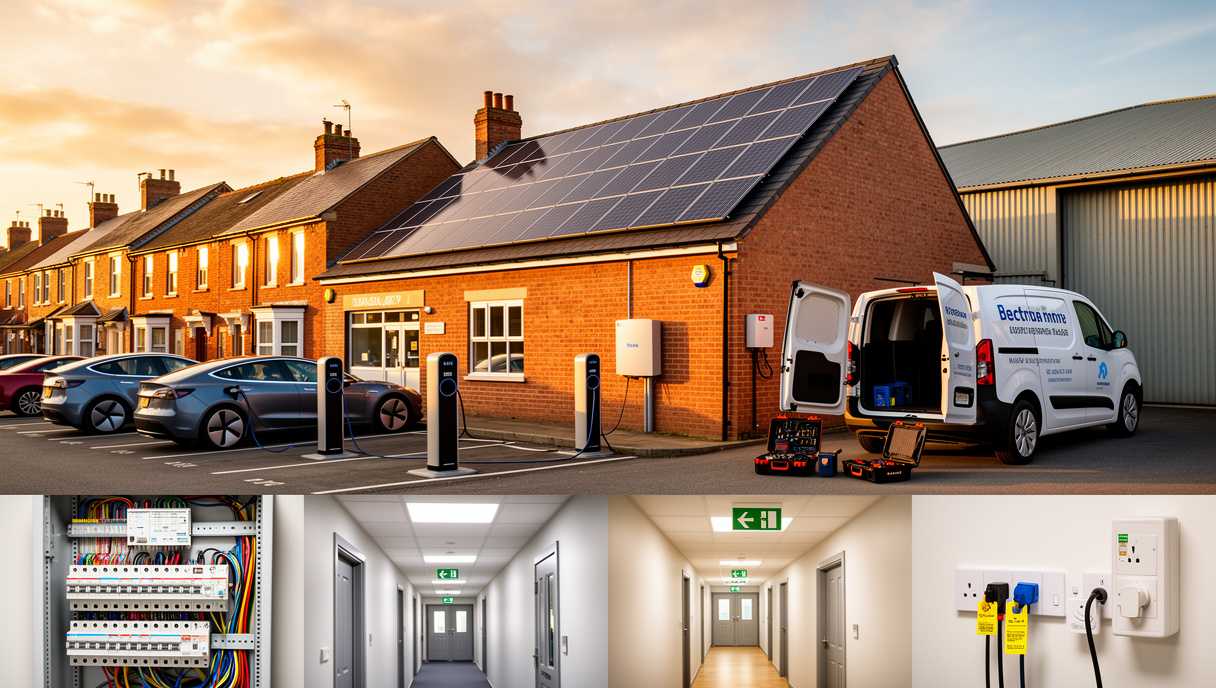
Core Residential and Commercial Services: From Fault Finding to Future‑Ready Upgrades
A dependable Electrician in Bedford delivers a blend of reactive support and proactive improvements. For homeowners, common priorities include consumer unit upgrades, partial or full rewires, and testing. If lights flicker, sockets feel warm, or breakers regularly trip, expert fault finding isolates the root cause—often a high‑resistance joint, moisture ingress, or an overloaded circuit. After diagnosis, clear recommendations follow, whether that’s repairing a damaged ring final circuit or redistributing loads onto RCBO‑protected ways for targeted protection.
Lighting remains one of the fastest ways to cut energy costs and boost comfort. An LED upgrade—swapping halogens, fluorescents, or aging CFLs for efficient LEDs—reduces consumption and heat, while smart controls enable scenes, dimming, and presence detection. In period homes, careful selection of warm‑white lamps preserves character without sacrificing efficiency. Outdoors, safe, RCD‑protected garden sockets and IP‑rated fittings transform patios and driveways while respecting Bedford’s variable weather.
Commercial and industrial sites benefit from structured maintenance. PAT testing keeps portable appliances in check; scheduled RCD testing confirms lifesaving devices trip within specification; and periodic EICRs ensure the fixed installation remains sound as layouts evolve. In warehouses and factories, LED high‑bay upgrades can halve lighting bills while improving colour rendering and worker visibility. Offices gain from low‑glare panels, emergency lighting to BS 5266, and power distribution designed for flexible desk layouts—cutting downtime when teams move or expand.
Future‑ready upgrades are increasingly popular. EV charge points support the switch to electric vehicles at home and at work; installing them on correctly sized circuits with open PEN protection and load management safeguards your supply. Solar PV and battery storage provide resilience against rising energy costs, with batteries shifting surplus solar into evening use or acting as backup during grid outages. When integrated thoughtfully—coordinated with your consumer unit, protection devices, and monitoring—these technologies slot seamlessly into your existing infrastructure, maximising return while staying compliant with current standards.
Local Scenarios and Real‑World Examples: How Bedford Properties Gain from Expert Electrical Work
Every project tells a story of tailored design and careful execution. Consider a Victorian terrace off Goldington Road: the homeowner had a legacy fuse board, limited socket capacity, and concerns about aging rubber‑insulated cabling. A site survey revealed a partially upgraded ring with inconsistent terminations and an under‑sized earth. The solution combined a modern metal‑clad consumer unit with RCBOs, upgraded earthing and bonding, and targeted rewiring of affected circuits—minimising disruption by lifting floorboards strategically and using existing routes where safe. The result? Faster fault discrimination, improved shock protection, and capacity for a future kitchen refurb without further upheaval.
In Kempston’s light‑industrial pocket, a logistics unit needed brighter, safer lighting and documented compliance. The design swapped old sodium lamps for LED high‑bays with intelligent controls, cutting energy use while improving illuminance and uniformity. Emergency lighting was mapped to escape routes and tested to verify duration. The final package included detailed test results, updated circuit schedules, and maintenance guidance—reducing overheads and streamlining future inspections. In parallel, PAT testing brought handheld tools and IT gear into line, simplifying the company’s safety file before an audit.
Education sites around Bedford require robust safety and minimal downtime. A school’s ageing distribution board and sporadic breaker trips demanded a phased approach over holidays: install a new distribution arrangement with RCBOs and SPDs, label all circuits clearly, and perform an EICR to prioritise remedial works. Clear documentation helped leadership understand urgency levels, while staged works avoided term‑time disruption. Post‑project monitoring confirmed stability, and energy reports showed gains from incremental LED replacements in corridors and classrooms.
Renewables are reshaping local energy use, too. A detached home near Biddenham installed a 4–6 kW solar array with battery storage. Coordinating the solar inverter with the main consumer unit and ensuring appropriate isolation points made compliance straightforward for future testing. With smart monitoring, the family shifted appliance use to daytime solar windows, then relied on stored energy in the evening—cutting bills and smoothing demand on the grid. Crucially, the system was designed with headroom for a driveway EV charger, illustrating how good planning avoids rework later.
What should you expect from a top‑tier service experience? It starts with attentive consultation: understanding your property, goals, and constraints. A clear scope and itemised quote demystify costs, timelines, and any planned power‑off windows. On site, tidy workmanship, calibrated test instruments, and labelled distribution boards set the tone for professionalism. After completion, you should receive certificates, test sheets, and user guidance—evidence that the installation meets current standards and is safe to operate. If you’re comparing providers, look for transparent communication, up‑to‑date training, and experience across domestic, commercial, and industrial settings. These traits indicate your project—whether a simple socket addition or a multi‑board commercial fit‑out—will be planned and delivered with the care it deserves.
For homeowners, landlords, facilities managers, and site leads seeking dependable electrical support grounded in local experience, an Electrician in Bedford offers exactly that. With the right partner, essential tasks like consumer unit upgrades, fault finding, and compliance testing dovetail seamlessly with forward‑looking projects—EV charging, solar PV, and battery storage—so your property is safer today and ready for tomorrow. The outcome is peace of mind, lower running costs, and a resilient installation designed around how you actually live and work in Bedford.

Munich robotics Ph.D. road-tripping Australia in a solar van. Silas covers autonomous-vehicle ethics, Aboriginal astronomy, and campfire barista hacks. He 3-D prints replacement parts from ocean plastics at roadside stops.
0 Comments